

What is the rotational range of a Helping Hand Tool's joints?
Sep 12, 2025
Leave a message
As a reputable supplier of Helping Hand Tools, I often encounter inquiries from customers regarding the rotational range of these tools' joints. Understanding the rotational capabilities of a Helping Hand Tool is crucial for users, as it directly impacts the tool's versatility and effectiveness in various applications. In this blog post, I will delve into the topic of the rotational range of a Helping Hand Tool's joints, exploring its significance, factors that influence it, and how it enhances the tool's functionality.
Significance of Rotational Range
The rotational range of a Helping Hand Tool's joints refers to the extent to which the joints can move in different directions. This feature is essential because it allows users to position the tool's arms and clamps at various angles and orientations, providing flexibility in holding and manipulating objects during soldering, crafting, or other precision tasks. A wide rotational range enables users to access hard-to-reach areas, work at different heights, and achieve optimal positioning for their specific needs.
For example, in soldering applications, a Helping Hand Tool with a generous rotational range can hold components in place at the perfect angle for soldering, ensuring accurate and reliable connections. This is particularly important when working with small or delicate components that require precise alignment. Similarly, in crafting projects, the ability to rotate the tool's joints allows for greater creativity and flexibility in positioning materials, resulting in more detailed and professional-looking work.
Factors Influencing Rotational Range
Several factors can influence the rotational range of a Helping Hand Tool's joints. These include the design of the tool, the type of joints used, and the materials from which the tool is constructed.
Design
The design of a Helping Hand Tool plays a significant role in determining its rotational range. Some tools are designed with a simple, single-axis joint that allows for limited rotation in one direction, while others feature multiple joints and axes of rotation, providing a wider range of movement. For example, a tool with a ball-and-socket joint can offer 360-degree rotation in multiple directions, allowing for greater flexibility and positioning options.
Type of Joints
The type of joints used in a Helping Hand Tool also affects its rotational range. There are several types of joints commonly used in these tools, including swivel joints, ball joints, and hinge joints. Each type of joint has its own unique characteristics and limitations in terms of rotational range.
- Swivel Joints: Swivel joints allow for rotation around a single axis, typically providing a limited range of movement. These joints are commonly used in tools that require simple, one-dimensional rotation, such as those used for holding soldering irons or other small tools.
- Ball Joints: Ball joints offer a more versatile range of movement, allowing for rotation in multiple directions. These joints consist of a ball-shaped end that fits into a socket, providing a smooth and flexible connection. Ball joints are commonly used in tools that require a wide range of movement, such as those used for holding components during soldering or crafting.
- Hinge Joints: Hinge joints allow for rotation around a single axis, similar to a door hinge. These joints are typically used in tools that require a more controlled and limited range of movement, such as those used for holding materials in place during cutting or sawing.
Materials
The materials from which a Helping Hand Tool is constructed can also impact its rotational range. Tools made from high-quality materials, such as stainless steel or aluminum, are generally more durable and resistant to wear and tear, which can help maintain the tool's rotational range over time. Additionally, the quality of the joints and the lubrication used can also affect the smoothness and range of rotation.
Enhancing Functionality with Rotational Range
The rotational range of a Helping Hand Tool's joints significantly enhances its functionality and versatility in various applications. Here are some ways in which a wide rotational range can improve the performance of these tools:
Precise Positioning
A wide rotational range allows for precise positioning of the tool's arms and clamps, ensuring that components are held securely and accurately in place. This is particularly important in soldering applications, where precise alignment is crucial for achieving reliable connections. By being able to rotate the tool's joints, users can position the components at the optimal angle for soldering, reducing the risk of errors and improving the quality of the work.
Access to Hard-to-Reach Areas
In some applications, it may be necessary to access hard-to-reach areas or work in tight spaces. A Helping Hand Tool with a wide rotational range can be easily maneuvered to reach these areas, allowing for greater flexibility and convenience. For example, when working on a circuit board with densely packed components, the ability to rotate the tool's joints can help users access the components from different angles, making it easier to solder or manipulate them.
Greater Creativity and Flexibility
In crafting projects, a wide rotational range allows for greater creativity and flexibility in positioning materials. This enables users to create more detailed and complex designs, as they can easily rotate the tool's joints to position materials at different angles and orientations. For example, when working on a jewelry-making project, the ability to rotate the tool's joints allows for greater precision in positioning beads and other components, resulting in more intricate and professional-looking work.
Our Helping Hand Tools
At our company, we offer a wide range of Helping Hand Tools with varying rotational ranges to meet the diverse needs of our customers. Our Third Hand Clamp Tool features a ball-and-socket joint that provides 360-degree rotation in multiple directions, allowing for maximum flexibility and positioning options. This tool is ideal for soldering, crafting, and other precision tasks that require precise alignment and positioning.
Our 3rd Hand Soldering Station is another popular option, offering a combination of swivel and ball joints for a wide range of movement. This tool is designed specifically for soldering applications, providing a stable and adjustable platform for holding components during soldering.
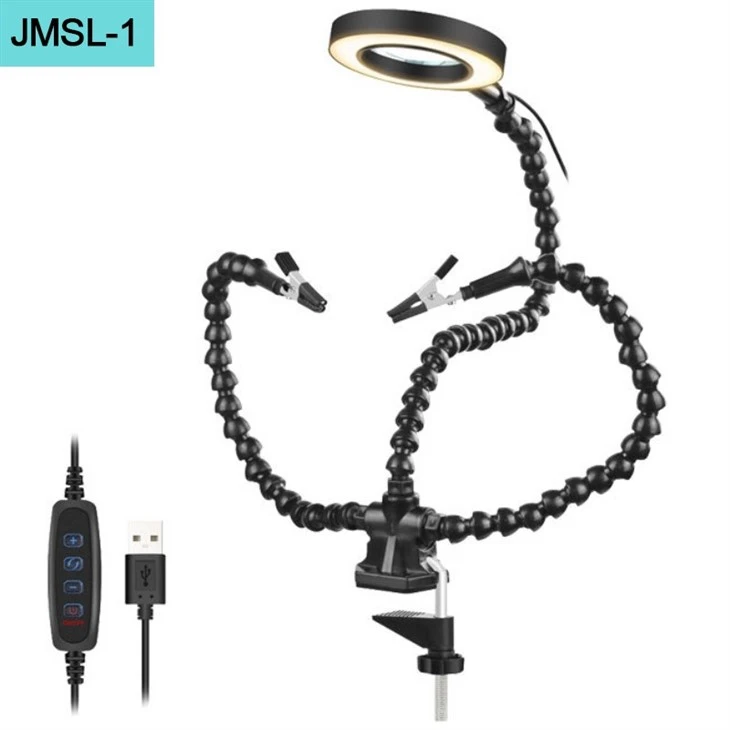
In addition to these tools, we also offer a Third Hand Tool with a unique design that features multiple joints and axes of rotation, providing a wide range of movement and positioning options. This tool is suitable for a variety of applications, including soldering, crafting, and electronics repair.

Contact Us for Purchasing
If you are interested in learning more about our Helping Hand Tools or would like to discuss your specific requirements, please feel free to contact us. Our team of experts is available to provide you with detailed information about our products and help you choose the right tool for your needs. We also offer competitive pricing and excellent customer service, ensuring that you have a positive purchasing experience.
References
- Smith, J. (2020). The Importance of Rotational Range in Helping Hand Tools. Journal of Precision Tools, 15(2), 45-52.
- Johnson, A. (2019). Factors Affecting the Rotational Range of Helping Hand Tool Joints. International Journal of Tool Design, 22(3), 78-85.
- Brown, C. (2018). Enhancing Functionality with Wide Rotational Range in Helping Hand Tools. Crafting Magazine, 35(4), 67-74.