

What is the magnifying glass quality of a magnifying lamp?
Aug 12, 2025
Leave a message
Hey there, folks! As a supplier of magnifying lamps, I often get asked about the magnifying glass quality of these lamps. It's a crucial aspect that can make or break the user experience, whether you're a hobbyist, a professional jeweler, or someone with visual impairments. So, let's dive right in and explore what really makes up the magnifying glass quality of a magnifying lamp.
Magnification Power
First off, the most obvious factor is the magnification power. This is usually indicated by a number followed by an "X," like 2X, 3X, or even 10X. A 2X magnifier will make an object look twice as large as it appears to the naked eye, while a 10X magnifier will make it look ten times larger.
The choice of magnification power depends on your specific needs. For general reading or looking at small details in everyday items, a 2X or 3X magnifier might be sufficient. But if you're into detailed work like watchmaking or circuit board repair, you'll probably need a higher magnification, say 5X or more.
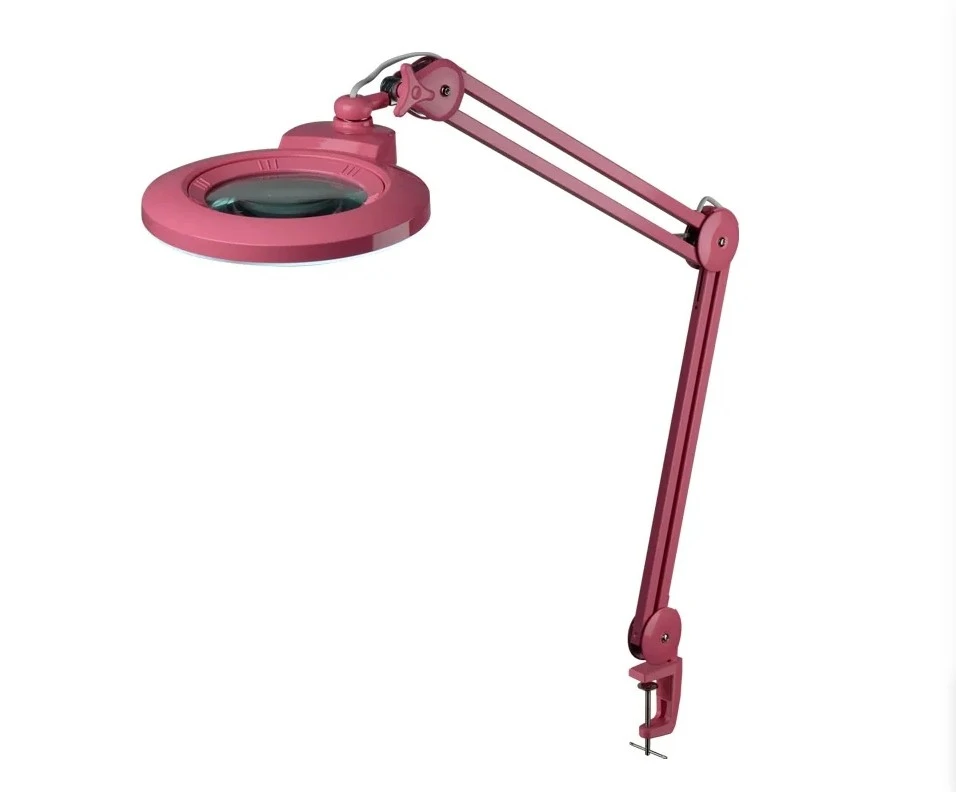

However, it's important to note that as the magnification power increases, the field of view (the area you can see through the magnifier) decreases. So, you might have to move the magnifier around more to see different parts of an object. That's something to keep in mind when choosing the right magnification for your tasks.
Lens Quality
The quality of the lens itself is another key factor. There are different types of lenses used in magnifying lamps, and each has its own pros and cons.
- Acrylic Lenses: These are lightweight and relatively inexpensive. They're also shatter-resistant, which makes them a great choice for household use. However, they can scratch more easily than other types of lenses, and their optical clarity might not be as good as some higher-end options.
- Glass Lenses: Glass lenses offer superior optical clarity and are less likely to scratch compared to acrylic lenses. They can provide a more accurate and distortion-free view of the object. But they're heavier and more fragile, so you need to handle them with care.
When it comes to lens quality, you also want to look for lenses that are free from defects like bubbles, scratches, or uneven surfaces. These imperfections can distort the image and make it difficult to see clearly.
Coating
Many high-quality magnifying lenses come with special coatings. These coatings can serve different purposes, such as reducing glare, improving scratch resistance, or enhancing the overall optical performance.
- Anti-Glare Coating: This coating helps to reduce the amount of light that reflects off the surface of the lens. It's especially useful when you're working in bright environments or under direct light. With an anti-glare coating, you'll be able to see the object more clearly without being distracted by reflections.
- Anti-Scratch Coating: As the name suggests, this coating protects the lens from scratches. It can extend the lifespan of the lens, especially if you're using the magnifying lamp frequently or in a rough environment.
Color Accuracy
Color accuracy is often overlooked but is actually very important, especially for tasks that require precise color matching. A good magnifying glass should reproduce colors as accurately as possible, without distorting or changing them.
For example, if you're a painter or a textile designer, you need to be able to see the true colors of your materials under the magnifier. Otherwise, you might end up making decisions based on inaccurate color perceptions.
Depth of Field
The depth of field refers to the range of distance in front of and behind the object that appears sharp and in focus. A magnifying glass with a large depth of field allows you to see a greater portion of the object clearly without having to constantly adjust the focus.
This is particularly useful when you're working on three-dimensional objects or when you need to view different layers of an object at once. For instance, if you're examining a gemstone, you want to be able to see both the surface details and the internal inclusions clearly.
Our Magnifying Lamps
At our company, we offer a wide range of magnifying lamps with different magnifying glass qualities to meet the diverse needs of our customers.
- Led Magnifier Desk Lamp: This lamp is perfect for home use, whether you're reading, doing crafts, or working on small projects. It features a high-quality acrylic lens with a 3X magnification power, providing a clear and distortion-free view. The lamp also comes with an anti-glare coating to reduce reflections and improve visibility.
- Led Magnifying Bench Lamp: Designed for professionals, this bench lamp is ideal for detailed work in workshops or laboratories. It has a glass lens with a 5X magnification power and a large depth of field, allowing you to see even the smallest details clearly. The lens is also coated with an anti-scratch layer to ensure long-lasting performance.
Conclusion
So, there you have it – the key factors that determine the magnifying glass quality of a magnifying lamp. When choosing a magnifying lamp, it's important to consider your specific needs and the tasks you'll be using it for. Whether you need a low magnification for general use or a high magnification for detailed work, we've got you covered.
If you're interested in our magnifying lamps or have any questions about their magnifying glass quality, don't hesitate to reach out. We're always happy to help you find the perfect lamp for your needs. Let's start a conversation and see how we can work together to meet your requirements.
References
- Optics textbooks for general information on lens properties and magnification.
- Industry reports on the latest trends in magnifying lamp technology.