

What is the illumination area of a led magnifier desk lamp?
Sep 01, 2025
Leave a message
The illumination area of an LED magnifier desk lamp is a crucial factor that influences its usability and effectiveness. As a trusted supplier of high - quality Magnifying Lamp With Led Light, Led Magnifying Glass Desk Lamp, and LED Table Lamp With Magnifying Glass, I am well - versed in the technical aspects and practical implications of this feature.
Understanding the Concept of Illumination Area
The illumination area refers to the region on a surface where the light from the lamp provides sufficient brightness for a particular task. In the case of an LED magnifier desk lamp, this area is essential for activities such as reading small print, intricate crafting, or detailed inspection work. The size and quality of the illumination area can significantly impact the user's experience and the accuracy of the task at hand.
Factors Affecting the Illumination Area
1. LED Characteristics
The type and quality of LEDs used in the lamp play a vital role. High - power LEDs generally emit more light, which can result in a larger illumination area. Additionally, the color temperature and color rendering index (CRI) of the LEDs affect the perceived quality of the light within the area. A high CRI ensures that colors are accurately represented, which is particularly important for tasks like color - matching in crafts or art.
2. Magnifier Design
The design of the magnifying lens can also influence the illumination area. A larger magnifying lens may allow more light to pass through, potentially increasing the illuminated area. However, the curvature and optical properties of the lens need to be carefully balanced to avoid distortion and ensure uniform lighting across the area.
3. Lamp Structure and Reflectors
The physical structure of the lamp, including the position and shape of the LED light source and any reflectors, affects how the light is distributed. Well - designed reflectors can direct the light in a specific pattern, expanding the illumination area and reducing glare. For example, a lamp with a parabolic reflector can focus the light more effectively, creating a larger and more evenly lit area.
4. Distance from the Surface
The distance between the lamp and the surface being illuminated is a critical factor. As the lamp is moved closer to the surface, the illumination area may decrease in size but increase in intensity. Conversely, moving the lamp further away can expand the area, but the light intensity will decrease. Finding the optimal distance is crucial for achieving the desired balance between area size and light intensity.
Measuring the Illumination Area
There are several methods to measure the illumination area of an LED magnifier desk lamp. One common approach is to use a light meter to measure the illuminance (lux) at different points on a flat surface. The area where the illuminance meets a certain threshold (e.g., 500 lux for general reading tasks) can be considered the effective illumination area.
Another method is to visually assess the area by observing the spread of light on a surface. This can be done by placing a white sheet of paper on the work surface and noting the boundaries where the light appears to be sufficient for the intended task.
Importance of a Suitable Illumination Area
1. Productivity
A well - defined and appropriately sized illumination area can enhance productivity. When working on detailed tasks, having a large enough area of bright, uniform light allows users to focus without constantly adjusting the lamp or repositioning their work. This reduces eye strain and fatigue, enabling users to work for longer periods with greater accuracy.
2. Comfort
A proper illumination area contributes to user comfort. Glare and uneven lighting can cause discomfort and even headaches. By ensuring that the light is evenly distributed across the work area, users can work in a more pleasant and stress - free environment.
3. Quality of Work
For tasks that require precision, such as jewelry making or electronics repair, the quality of the illumination area is directly related to the quality of the work. A large, well - lit area allows for better visibility of small details, reducing the likelihood of errors and improving the overall outcome.
Our Product Offerings
As a supplier of LED magnifier desk lamps, we understand the importance of a suitable illumination area. Our Magnifying Lamp With Led Light is designed with high - quality LEDs that provide a large and uniform illumination area. The lamp features a carefully crafted reflector system that directs the light effectively, minimizing glare and maximizing the usable area.
Our Led Magnifying Glass Desk Lamp combines a powerful magnifying lens with a well - distributed LED light source. The lens is designed to provide clear magnification without sacrificing the illumination area. This makes it ideal for tasks that require both close - up viewing and a wide field of light.

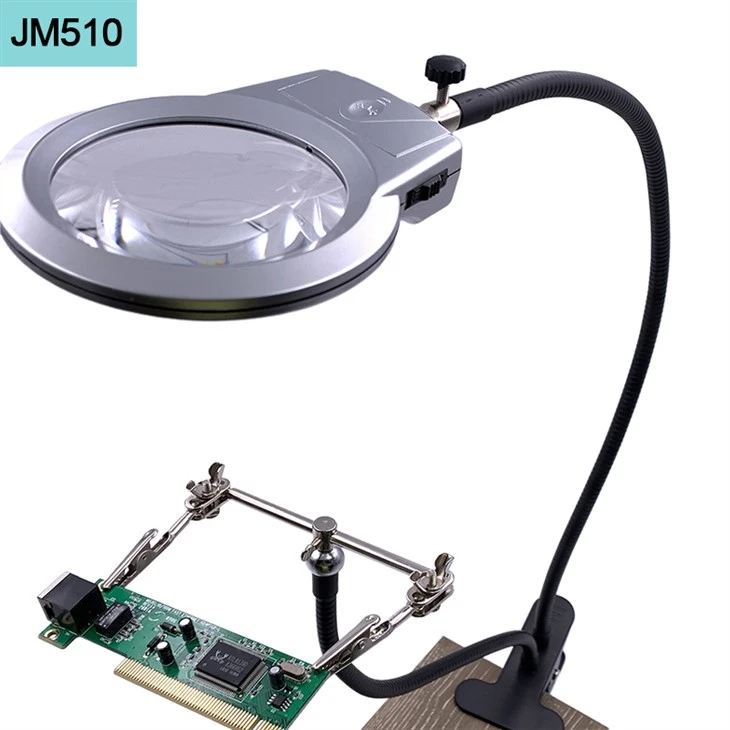
The LED Table Lamp With Magnifying Glass is another excellent option. It offers adjustable height and angle settings, allowing users to customize the illumination area according to their specific needs. The lamp's sturdy construction and high - performance LEDs ensure long - lasting and reliable use.
Contact for Procurement
If you are interested in our LED magnifier desk lamps and want to discuss your specific requirements, we invite you to reach out. Our team of experts is ready to assist you in finding the perfect lamp for your needs. Whether you are a retailer looking to stock our products or an individual in search of a high - quality lamp for personal use, we can provide you with detailed information and competitive pricing.
References
- Rea, M. S. (Ed.). (2000). The IESNA Lighting Handbook: Reference & Application (9th ed.). Illuminating Engineering Society of North America.
- Hunt, R. W. G. (1987). Measuring Colour (2nd ed.). Ellis Horwood Limited.
- Smith, J. C. (2015). Lighting Design Basics. John Wiley & Sons.