

What is the corrosion resistance of a hose clip clamp?
Aug 06, 2025
Leave a message
Hey there! As a supplier of hose clip clamps, I often get asked about the corrosion resistance of these little but crucial components. So, let's dive right in and talk about what corrosion resistance means for hose clip clamps.
First off, what is corrosion? Well, corrosion is basically the gradual destruction of materials, usually metals, by chemical reactions with their environment. For hose clip clamps, this can be a real problem. If a clamp corrodes, it can lose its strength, become brittle, and eventually fail to hold the hose in place properly. This can lead to leaks, which can be a huge headache in many applications, whether it's in your car's engine, a plumbing system, or an industrial setup.
Now, let's look at the factors that affect the corrosion resistance of hose clip clamps. One of the most important factors is the material the clamp is made of. We offer a variety of materials for our hose clip clamps, each with its own level of corrosion resistance.
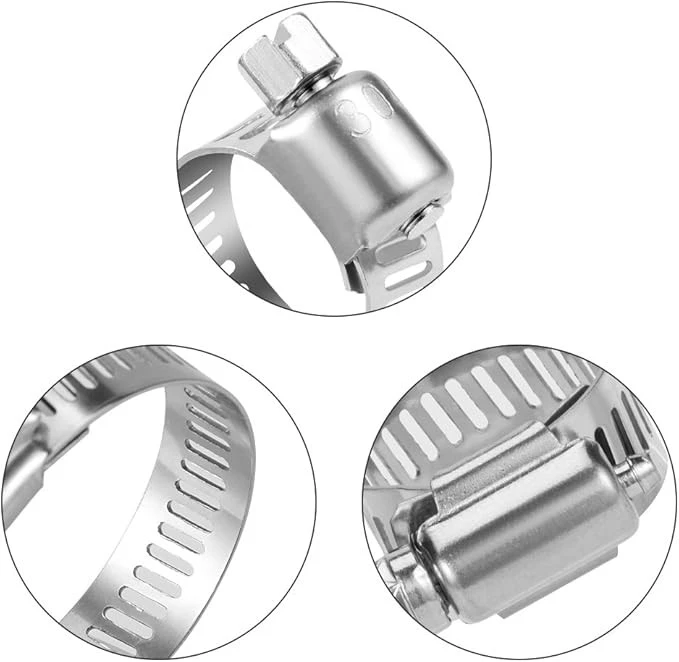
Stainless steel is a popular choice for hose clip clamps. It's known for its excellent corrosion resistance, especially in environments where there's exposure to moisture, chemicals, or salt. Stainless steel contains chromium, which forms a thin, protective oxide layer on the surface of the metal. This layer acts as a barrier, preventing oxygen and moisture from reaching the underlying metal and causing corrosion. For example, our American Hose Clamp is made of 304 stainless steel, which is a common grade that offers good corrosion resistance in a wide range of applications.
Another material we use is carbon steel. Carbon steel is strong and relatively inexpensive, but it's not as corrosion-resistant as stainless steel. Without proper protection, carbon steel can rust quickly when exposed to moisture. However, we can apply coatings or finishes to carbon steel hose clip clamps to improve their corrosion resistance. For instance, we can galvanize the clamps, which involves coating them with a layer of zinc. Zinc is more reactive than iron, so it corrodes first, protecting the underlying carbon steel.

The environment in which the hose clip clamp is used also plays a big role in its corrosion resistance. In a dry, clean environment, the risk of corrosion is relatively low. But in a wet, humid, or chemically aggressive environment, the clamp is more likely to corrode. For example, in a marine environment, where there's a lot of saltwater, the corrosion rate can be much higher. That's why it's important to choose the right type of hose clip clamp for the specific application. If you're using the clamp in a harsh environment, you might want to go for a stainless steel clamp or a carbon steel clamp with a high-quality coating.
The design of the hose clip clamp can also affect its corrosion resistance. A well-designed clamp should have smooth surfaces and no sharp edges or crevices where moisture and dirt can accumulate. These areas can trap moisture and create a more corrosive environment. Our T-Bolt Hose Clamps are designed with these factors in mind. They have a smooth, rounded shape that helps prevent the buildup of moisture and dirt, reducing the risk of corrosion.
Now, let's talk about how to test the corrosion resistance of hose clip clamps. There are several methods that can be used to evaluate the corrosion resistance of metals. One common method is the salt spray test. In this test, the clamp is placed in a chamber and exposed to a fine mist of saltwater for a specified period of time. After the test, the clamp is examined for signs of corrosion, such as rust or pitting. The longer the clamp can withstand the salt spray without showing significant corrosion, the better its corrosion resistance.
Another method is the immersion test. In this test, the clamp is immersed in a solution that simulates the environment in which it will be used. The solution can be a saltwater solution, an acidic solution, or a solution containing other chemicals. The clamp is left in the solution for a certain period of time, and then it's examined for corrosion.
As a supplier, we take the corrosion resistance of our hose clip clamps very seriously. We use high-quality materials and advanced manufacturing processes to ensure that our clamps have excellent corrosion resistance. We also conduct rigorous testing on our products to make sure they meet or exceed industry standards.
If you're in the market for hose clip clamps, it's important to consider the corrosion resistance of the clamps. Think about the environment in which the clamps will be used and choose the right material and design accordingly. And if you have any questions or need help selecting the right hose clip clamps for your application, don't hesitate to reach out to us. We're here to help you find the best solution for your needs.
Our Hose Clamp Clip is another great option that offers good corrosion resistance and reliable performance. Whether you need a small number of clamps for a DIY project or a large quantity for an industrial application, we can provide you with high-quality hose clip clamps at competitive prices.
In conclusion, the corrosion resistance of a hose clip clamp is a crucial factor that can affect its performance and lifespan. By choosing the right material, considering the environment, and using proper testing methods, you can ensure that your hose clip clamps will provide long-lasting, reliable service. If you're interested in purchasing our hose clip clamps or have any questions about their corrosion resistance, feel free to contact us. We're ready to assist you with your procurement needs and have a productive discussion about how our products can meet your requirements.
References
- Metals Handbook: Corrosion, ASM International
- Corrosion Resistance of Metals and Alloys, L. L. Shreir, R. A. Jarman, and G. T. Burstein