

Is the Helping Hands Magnifier suitable for people with low vision?
Jul 08, 2025
Leave a message
Hey there! I'm a supplier of the Helping Hands Magnifier, and I've been getting a lot of questions lately about whether this nifty tool is suitable for people with low vision. So, I thought I'd sit down and write this blog to give you the lowdown.
First off, let's talk about what the Helping Hands Magnifier actually is. It's a multi - purpose tool that combines the functionality of a helping hand (which holds your work in place) with a magnifier. You can find out more about it on this page: Helping Hands Magnifier. It's often used in tasks like soldering, jewelry making, and other fine - detail work. But the big question is, can it be a game - changer for those with low vision?
Understanding Low Vision
Before we dive into how the Helping Hands Magnifier fits the bill, let's quickly understand what low vision means. Low vision isn't the same as being blind. People with low vision still have some usable vision, but it's not good enough to do things like reading, recognizing faces, or doing detailed work without some kind of aid. It can be caused by a variety of factors, like age - related macular degeneration, glaucoma, or diabetic retinopathy.
Features of the Helping Hands Magnifier
One of the key features of the Helping Hands Magnifier is its magnifying power. Most models come with different levels of magnification, usually ranging from 2x to 10x. This is super important for people with low vision because it allows them to see small details more clearly. For example, if you're working on a small circuit board for soldering, a higher magnification can help you see the tiny components and the connections more precisely. You can also check out the Helping Hands Soldering Aid which has similar useful features for soldering tasks.
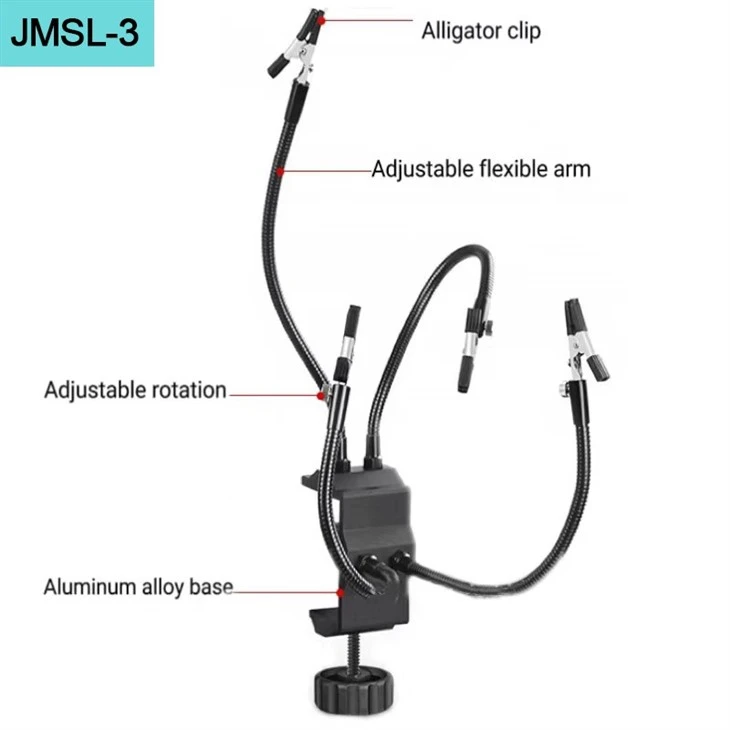
Another great thing about this magnifier is its flexibility. The arms of the helping hands can be adjusted to hold your work at different angles and distances from the magnifier. This is crucial for people with low vision because they might need to find the perfect position to get the best view. You can tilt the magnifier, move it closer or farther away, and adjust the arms to hold your workpiece firmly in place.

The lighting on the Helping Hands Magnifier is also a big plus. Many models come with built - in LED lights. Good lighting is essential for people with low vision as it can enhance contrast and make it easier to see. The LED lights are usually adjustable in terms of brightness, so you can set it to the level that works best for you.
Practical Use for People with Low Vision
Let's think about some real - world scenarios where the Helping Hands Magnifier can be a huge help. Take jewelry making, for example. People with low vision who love making jewelry might find it difficult to thread tiny beads or work on delicate settings. With the Helping Hands Magnifier, they can hold the beads in place with the helping hands and use the magnifier to see the details clearly. The adjustable lighting can also make it easier to distinguish between different colors and textures of the materials.
In the field of electronics, soldering is a common task. Soldering requires precision, and it can be extremely challenging for those with low vision. The Helping Hands Magnifier can hold the circuit board steady, and the magnifier can make it easier to see the small solder joints. The lighting can also help in identifying any potential short - circuits or loose connections.
Limitations
Of course, like any tool, the Helping Hands Magnifier isn't perfect. One limitation is that it might not be suitable for all types of low - vision conditions. For example, if someone has a very specific visual impairment that affects their peripheral vision or depth perception, the magnifier might not fully compensate for those issues. Also, the magnifying power might not be sufficient for some people with more severe low vision. In such cases, they might need a more specialized magnifying device.
Comparing with Other Options
There are other magnifying tools available in the market, but the Helping Hands Magnifier has some unique advantages. Some standalone magnifiers don't have the ability to hold your work in place, which can be a real hassle when you're trying to do detailed tasks. And some magnifiers with built - in lights might not be as adjustable as the Helping Hands Magnifier.
On the other hand, Welding Third Hand Tool is more focused on welding tasks. While it also has the function of holding the workpiece, it might not have the same level of magnifying power and lighting features that are specifically designed for people with low vision.
Conclusion
So, is the Helping Hands Magnifier suitable for people with low vision? In most cases, the answer is yes. It offers a combination of features like adjustable magnification, flexible positioning, and good lighting that can make a big difference for those with low vision who are trying to do detailed work. However, it's important to note that it might not be a one - size - fits - all solution.
If you or someone you know has low vision and is interested in the Helping Hands Magnifier, I'd love to have a chat with you. We can discuss your specific needs and see if this tool is the right fit for you. Whether you're into soldering, jewelry making, or any other fine - detail work, we can help you make the most of this great tool. Reach out to me if you're interested in purchasing or just want to learn more about it. I'm here to assist you in finding the best solution for your low - vision needs.
References
- American Foundation for the Blind. (n.d.). What is Low Vision?
- National Eye Institute. (n.d.). Low Vision: Living with Sight Loss.