

Can alligator clips be used for measuring resistance?
Jun 24, 2025
Leave a message
Can alligator clips be used for measuring resistance? This is a question that often comes up in the fields of electronics, electrical engineering, and DIY projects. As a supplier of high - quality alligator clips, I'm here to delve into this topic and provide you with a comprehensive answer.
The Basics of Measuring Resistance
Before we discuss whether alligator clips can be used for measuring resistance, let's briefly go over how resistance measurement works. Resistance is a property of an electrical component that opposes the flow of electric current. It is measured in ohms (Ω). The most common way to measure resistance is by using a multimeter. A multimeter can be set to the resistance measurement mode, and it passes a small known current through the component and measures the voltage drop across it. Then, using Ohm's Law (V = IR, where V is voltage, I is current, and R is resistance), it calculates the resistance value.
The Role of Alligator Clips in Resistance Measurement
Alligator clips are versatile electrical connectors. They have spring - loaded jaws that can grip onto wires, leads, or other conductive objects firmly. When it comes to measuring resistance, alligator clips can indeed play a crucial role.
One of the main advantages of using alligator clips for resistance measurement is their ease of use. They allow you to quickly and securely connect the multimeter probes to the component whose resistance you want to measure. For example, if you are measuring the resistance of a resistor on a breadboard, it can be challenging to hold the multimeter probes in place for an accurate reading. Alligator clips solve this problem by providing a stable connection.
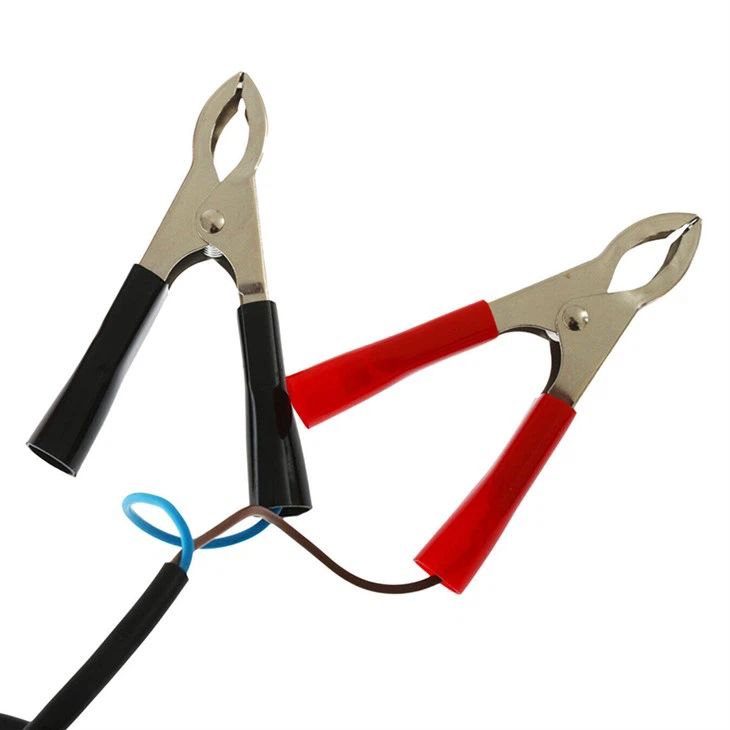

Another benefit is their flexibility. Alligator clips come in various sizes and materials. You can choose the appropriate alligator clips based on the size of the component and the environment in which you are working. For instance, if you are working with small - gauge wires, you can use smaller alligator clips. If you need to make a connection in a high - temperature environment, you can select alligator clips made of heat - resistant materials.
However, it's important to note that alligator clips themselves have some resistance. This internal resistance can affect the accuracy of the resistance measurement, especially when measuring low - resistance values. The resistance of an alligator clip depends on several factors, such as the material it is made of, its size, and the quality of the contact surface.
Factors Affecting the Accuracy of Resistance Measurement with Alligator Clips
- Material of the Alligator Clips
Alligator clips can be made of different metals, such as copper, brass, or nickel - plated steel. Copper is a good conductor with relatively low resistance, so alligator clips made of copper are often preferred for accurate resistance measurement. Brass has slightly higher resistance than copper, and nickel - plated steel may have even higher resistance, especially if the plating is not of high quality. - Contact Resistance
The contact resistance between the alligator clip and the component being measured is another critical factor. If the jaws of the alligator clip are dirty, corroded, or not making a good contact with the component, the contact resistance will increase. This can lead to inaccurate resistance readings. To minimize contact resistance, it's essential to keep the alligator clips clean and ensure a tight grip on the component. - Length of the Alligator Clip Jumper Wire
If you are using an Alligator Clip Jumper Wire, the length of the wire can also affect the resistance measurement. Longer wires have higher resistance due to their increased length. Therefore, for more accurate measurements, it's advisable to use shorter alligator clip jumper wires.
Techniques to Improve the Accuracy of Resistance Measurement with Alligator Clips
- Calibration
Before using alligator clips for resistance measurement, it's a good idea to calibrate your multimeter. This can help account for any small errors introduced by the alligator clips and the multimeter itself. You can use a known - value resistor to perform the calibration. - Four - Wire Measurement Method
In some cases, especially when measuring very low resistance values, the four - wire measurement method can be used. This method involves using two pairs of alligator clips. One pair is used to pass the current through the component, and the other pair is used to measure the voltage drop across the component. By separating the current - carrying path and the voltage - measuring path, the effect of the alligator clip resistance and the wire resistance can be minimized. - Multiple Measurements
Taking multiple resistance measurements and calculating the average can also improve the accuracy. This helps to reduce the impact of random errors caused by factors such as inconsistent contact between the alligator clips and the component.
Applications of Using Alligator Clips for Resistance Measurement
Alligator clips are widely used in various applications where resistance measurement is required. In electronics manufacturing, they are used to test the resistance of components during the production process. For example, when manufacturing printed circuit boards (PCBs), alligator clips can be used to quickly measure the resistance of resistors, capacitors, and other components on the board.
In educational settings, alligator clips are a popular tool for teaching students about electrical circuits and resistance measurement. They are easy to use and allow students to perform experiments safely and accurately.
In DIY electronics projects, alligator clips are indispensable. Whether you are building a simple LED circuit or a more complex Arduino project, alligator clips can help you measure the resistance of different components and ensure the proper functioning of your circuit.
Conclusion
In conclusion, alligator clips can be used for measuring resistance, and they offer many advantages such as ease of use, flexibility, and stability. However, their internal resistance and contact resistance can affect the accuracy of the measurement, especially when measuring low - resistance values. By understanding the factors that affect the accuracy and using appropriate techniques, you can use alligator clips to obtain reliable resistance measurements.
As a supplier of alligator clips, we offer a wide range of high - quality alligator clips and Alligator Clip Jumper Wire to meet your different needs. If you are interested in purchasing our products for your resistance measurement or other electrical projects, please feel free to contact us for further details and to start a procurement discussion. We are committed to providing you with the best products and services.
References
- Horowitz, P., & Hill, W. (1989). The Art of Electronics. Cambridge University Press.
- Boylestad, R. L., & Nashelsky, L. (2002). Electronic Devices and Circuit Theory. Prentice Hall.