

Can a led magnifying desk light be used for coral reef study (in a lab setting)?
Feb 10, 2026
Leave a message
Can LED Magnifying Desk Lights Be Used for Coral Reef Lab Studies?
Many marine researchers ask: Can an LED magnifying desk light work for coral reef studies in labs? I'm a supplier of LED magnifying desk lamps. I'll answer this question clearly. I'll talk about how these lights help your work, what to watch out for, and how to pick the right one.
Why Lighting Matters for Coral Reef Studies
Corals are part of complex underwater ecosystems. In the wild, corals need sunlight. Symbiotic algae in their tissues do photosynthesis. In labs, you need the right light. It keeps coral samples healthy. It also lets you see their biological processes. You need good light to check coral polyps, tissues, and tiny organisms under magnification.
How LED Magnifying Desk Lights Help Your Lab Work
1. Magnification for Small Details
You often need to see tiny parts of corals. Like tentacles, mouths, or skeleton structures. Our lamps have 2-5x magnification (some go up to 10x). The magnifying glass is built into the light. You don't need extra tools. This helps you find disease signs, damage, or how corals interact with other organisms. For example, you can see if bacteria are on the coral surface-something the naked eye can't catch.
2. Adjustable Lighting Fits Different Tasks
LED lights let you change brightness. This is key for coral studies. Different tasks need different light levels. For example:
When looking at coral fluorescence: Turn down the brightness. It makes fluorescent pigments easier to see.
When checking coral shape: Turn up the brightness. It gives better contrast and clarity.
Our lamps also let you adjust color temperature. This helps you see coral colors accurately.
3. Saves Energy and Lasts Long
LEDs use less power than old incandescent or fluorescent lights. Labs run lights for long hours. This saves you money on electricity. LEDs also last years. You won't need to replace bulbs often. That's less hassle for your lab.
4. Accurate Color Rendering
Coral color changes tell you a lot. They show stress, health, or symbiotic organisms. Our lamps have high CRI (Color Rendering Index). They reproduce colors correctly. You'll see the real color of your corals-no distortion.
Things to Watch Out For (And Our Solutions)
1. Heat-Don't Hurt Coral Samples
LEDs don't make much heat. But some high-power models do. Too much heat hurts coral samples. So our lamps have heat sinks. They keep the temperature stable around your corals. You won't have to worry about overheating.
2. Light Spectrum for Photosynthesis
Corals need specific light wavelengths for photosynthesis. Many LED lamps have adjustable spectrum-close to sunlight. It fits what corals need. If you need a specific wavelength (for special studies), we can customize it for you.
Pick a lamp with:
Adjustable brightness and color temperature.
Adjustable spectrum (for photosynthesis studies).
A focused beam (to light up specific areas without wasting light).

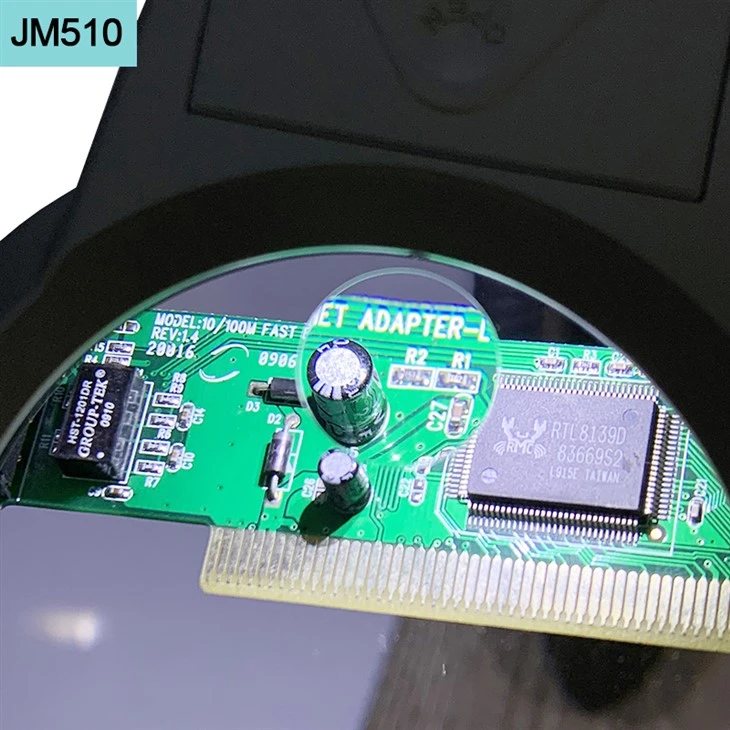
3. Build Quality
Labs need durable tools. Our lamps have sturdy bases. The arms are flexible but strong. The magnifying glass is scratch-resistant. It can handle daily lab use.
Let's Help Your Coral Research
LED magnifying desk lights are great for coral reef lab studies. They let you see small details, save energy, and adjust light to fit your tasks. Just watch for heat and spectrum-our lamps solve these problems.
If you're doing coral reef research:
Message us for a free 2-week sample. Test it with your coral samples. See how it helps your observations.
No cost, no risk. We'll even answer your questions about setup.
If you need a custom lamp (like specific magnification or spectrum), we can make it for you.
Let's make your lab work easier and more accurate. Contact us today to start your sample test!
References
Hatcher, B. G. (1988). The role of light in coral reef ecosystems. Coral Reefs, 7(1), 1-13.
Muscatine, L., & Porter, J. W. (1977). Coral polyp nutrition: the role of zooxanthellae. Annual Review of Ecology and Systematics, 8(1), 219-240.
Schubert, E. F., & Kim, J. K. (2005). Solid-state lighting: lamps, chips, and materials for tomorrow. Science, 308(5726), 1274-1278.